
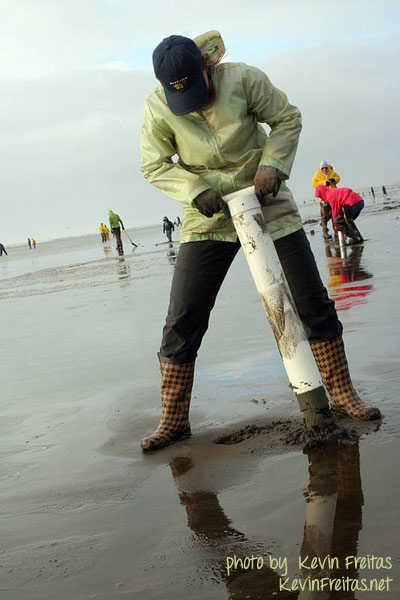
To learn all about razor clamming, including what equipment and license you need and how to use the gear to dig for clams, check out Northwest TripFinder’s Guide to Razor Clamming.
Get out your clamming tube! This year may just be a record razor clam season at some Washington state beaches.
Digging days and evening low tides for beaches tentatively scheduled to open are:
Oct. 17, Thursday, 6:15 p.m.; -0.2 feet; Twin Harbors
Oct. 18, Friday, 6:57 p.m.; -0.6 feet; Long Beach, Twin Harbors, Copalis and Mocrocks
Oct. 19, Saturday, 7:38 p.m.; -0.7 feet; Long Beach, Twin Harbors, Copalis and Mocrocks
Oct. 20, Sunday, 8:16 p.m.; -0.7 feet; Long Beach, Twin Harbors, Mocrocks
Oct. 21, Monday, 8:55 p.m.; -0.4 feet; Twin Harbors, Mocrocks
Oct. 22, Tuesday, 9:34 p.m.; -0.1 feet; Twin Harbors
For future clamming dates, just keep an eye on WDFW’s clamming calender.
Low tides will occur relatively late in the day, so diggers need be prepared for darkness during evening digs in the fall according to WDFW.
Where to Stay
Need ideas on accommodations for your Washington Coast razor clamming adventures? You’ll find our top lodging recommendations for the Long Beach area in our Trip Guide to the Long Beach Peninsula. You’ll find suggestions for places to stay near Copalis or Mockrocks in Northwest TripFinder’s Trip Guide to North Beach.
Photo by Kevin Freitas. See more of his great photos of clamming and more at kevinfreitas.net.